

How to Read a Food Label in 30 Seconds
The 4-step method to find out if a product contains gluten or dairy, starting from the 'Contains' section on the label.
EU law requires manufacturers to explicitly declare the 14 main allergens, usually in bold within the ingredients list or in a separate 'Contains' section — that's the first place to check. The problem is generic terms like 'sauce' or 'preparation', which can hide gluten or dairy derivatives without listing each ingredient individually. Follow this order until it becomes automatic.
| Step | Where to look | What you're looking for |
|---|---|---|
| 1 — 'Contains' section | At the bottom of the ingredients list or right after it | Wheat, barley, rye, milk, dairy, soy: just one of these words is enough to rule the product out |
| 2 — Ingredients list | Scan from the top for key words | Butter, cream, casein, caseinate, whey for dairy; malt, wheat starch, unspecified brewer's yeast for gluten |
| 3 — 'May contain traces of' | Always at the bottom, after 'Contains' | If you have confirmed celiac disease, traces always matter; with mild sensitivity, judge case by case — same goes for dairy |
| 4 — Vague ingredients | Anywhere in the list | 'Natural flavorings', 'modified starch', 'thickener' with no specified origin: when in doubt, avoid it or contact the manufacturer |
⚠ 'Gluten-free' doesn't mean 'dairy-free' (and vice versa)
A certified GF product isn't automatically DF, and vice versa: many gluten-free cookies contain butter, and many plant-based milk alternatives contain oats that aren't certified GF. Always check both sides of the label before buying.
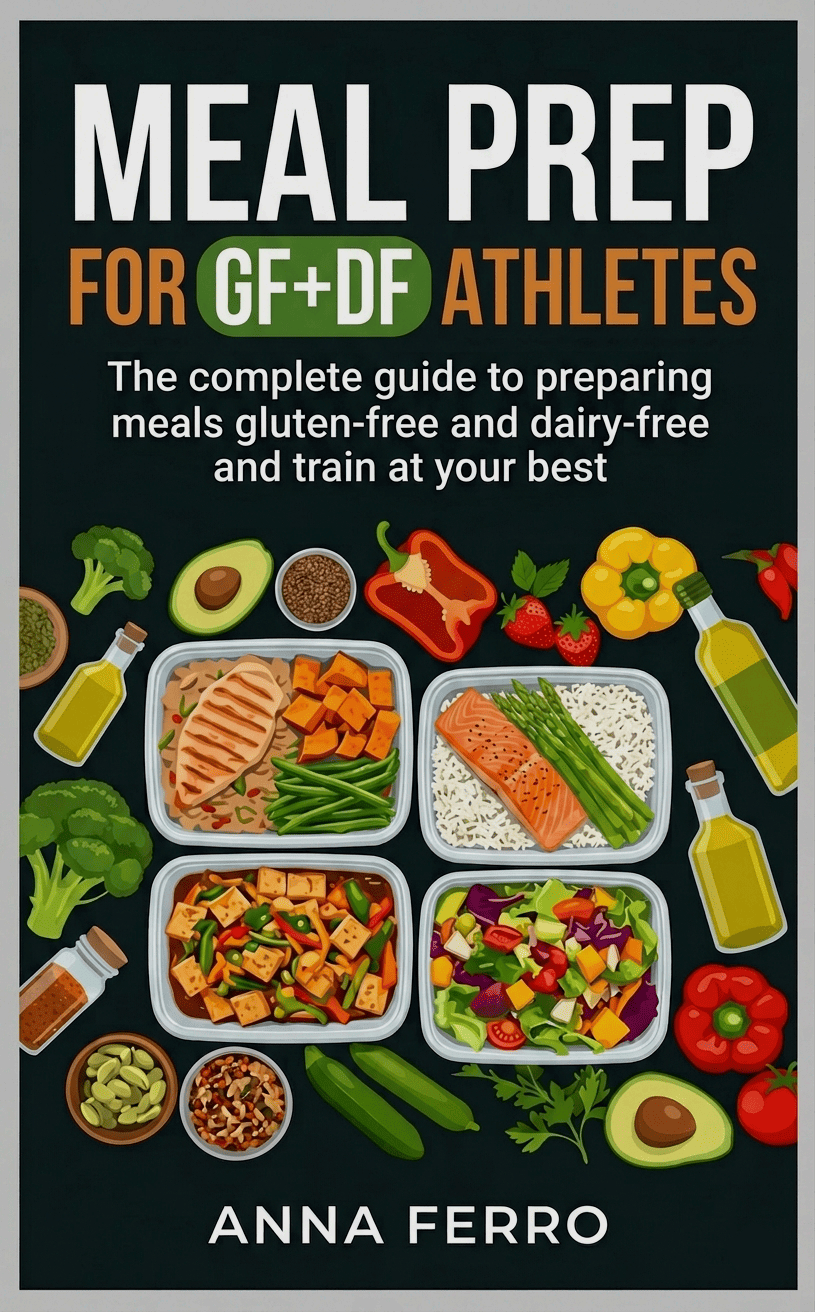
Meal Prep for GF+DF Athletes
Buy on Amazon ↗As an Amazon Associate, Facondia Lab earns from qualifying purchases made through these links.
The content on this page is for informational and practical purposes only: it doesn't replace professional advice. For specific dietary, health or medical needs, always consult a doctor or a qualified specialist.