







Raw to cooked weight conversion chart
How much rice, quinoa, gluten-free pasta, legumes, potatoes, chicken and fish weigh after cooking: conversion factors and examples to print.
Grains and legumes absorb water and gain weight when cooked, while meat, fish and potatoes lose it. To go from raw to cooked weight, multiply by the factor; to go the other way, divide by the same factor. These are average values that vary with brand, water and cooking time: jot down your own measurements in the margin after your first prep sessions. Vegetables aren't listed because their weight loss depends too much on the cooking method.
| Ingredient | Raw to cooked | Cooked to raw | Example (raw → cooked) |
|---|---|---|---|
| Basmati or white rice | × 2.5 | ÷ 2.5 | 80 g → ~200 g |
| Red, brown or black rice | × 2.5 | ÷ 2.5 | 100 g → ~250 g |
| Quinoa | × 2.8 | ÷ 2.8 | 70 g → ~195 g |
| Gluten-free pasta | × 2.0 | ÷ 2.0 | 120 g → ~240 g |
| Dried lentils (red or green) | × 3.0 | ÷ 3.0 | 60 g → ~180 g |
| Sweet potatoes or potatoes (baked) | × 0.82 | ÷ 0.82 | 180 g → ~150 g |
| Chicken or turkey (pan or oven) | × 0.75 | ÷ 0.75 | 170 g → ~130 g |
| Fish: salmon, cod (baked) | × 0.8 | ÷ 0.8 | 190 g → ~150 g |
Raw when you cook, cooked when you assemble
During your meal prep session you weigh ingredients raw and in bulk; when you put together a single meal you need the cooked weight. After 2-3 sessions you'll recognize portions by eye: the scale matters mostly at the start.
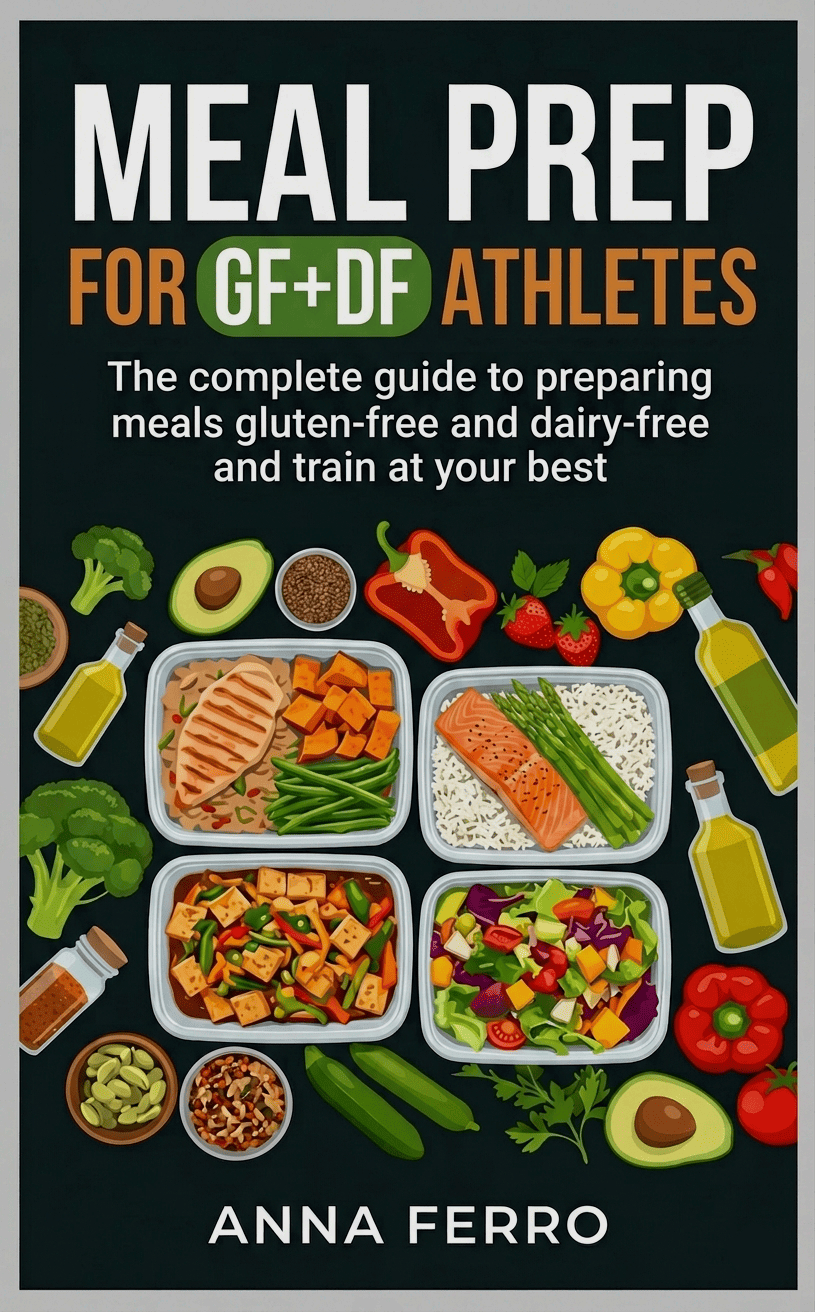
Meal Prep for GF+DF Athletes
Buy on Amazon ↗As an Amazon Associate, Facondia Lab earns from qualifying purchases made through these links.
The content on this page is for informational and practical purposes only: it doesn't replace professional advice. For specific dietary, health or medical needs, always consult a doctor or a qualified specialist.